Agriculture Drought Response

Consultation has concluded
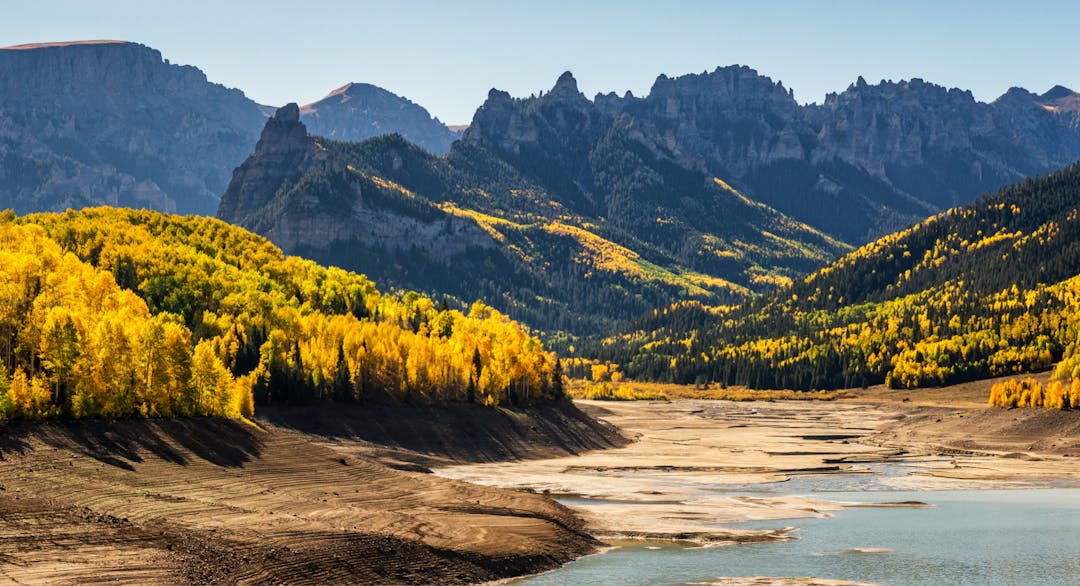
In June 2020, Governor Polis activated Phase 2 of the State's Drought Mitigation and Response Plan which initiated the Drought Task Force and the Agriculture Impact Task Force. According to the Colorado State Drought Plan, the Agriculture Impact Task Force is tasked to conduct an initial assessment on physical and economic impacts and recommend opportunities for mitigation. Co-chaired by the Colorado Water Conservation Board, Colorado Department of Agriculture, and Colorado State University Water Center, this representative team has pulled together a virtual drought tour concept in lieu of the widely valued 2018 in-person southwestern drought tour.

You can hear directly from producers and communities responding to the ongoing drought through this public engagement platform and a new interactive web report.

Explore the COLORADO DROUGHT STORY PROJECT at bit.ly/codroughtreport


To explore current conditions and active watering restrictions, visit the US Drought Monitor for Colorado, or for more detail, the Colorado Climate Center's outlook maps.

The primary audience for drought impact reports and stories below are four interagency drought teams that collectively report to the legislators and Governor on recommended actions. Activity here is closely monitored by CWCB staff. Please note that all stories submitted will be part of the state's official record and subject to the Colorado Open Records Act.

Your participation can directly inform current and future statewide drought response efforts. Thank you for your willingness to engage!

In June 2020, Governor Polis activated Phase 2 of the State's Drought Mitigation and Response Plan which initiated the Drought Task Force and the Agriculture Impact Task Force. According to the Colorado State Drought Plan, the Agriculture Impact Task Force is tasked to conduct an initial assessment on physical and economic impacts and recommend opportunities for mitigation. Co-chaired by the Colorado Water Conservation Board, Colorado Department of Agriculture, and Colorado State University Water Center, this representative team has pulled together a virtual drought tour concept in lieu of the widely valued 2018 in-person southwestern drought tour.

You can hear directly from producers and communities responding to the ongoing drought through this public engagement platform and a new interactive web report.

Explore the COLORADO DROUGHT STORY PROJECT at bit.ly/codroughtreport


To explore current conditions and active watering restrictions, visit the US Drought Monitor for Colorado, or for more detail, the Colorado Climate Center's outlook maps.

The primary audience for drought impact reports and stories below are four interagency drought teams that collectively report to the legislators and Governor on recommended actions. Activity here is closely monitored by CWCB staff. Please note that all stories submitted will be part of the state's official record and subject to the Colorado Open Records Act.

Your participation can directly inform current and future statewide drought response efforts. Thank you for your willingness to engage!

Tell Your Drought Story

Tell your story about how drought is impacting you.

Thank you for sharing your story with us.
CLOSED: This discussion has concluded.

  • Rainwater collection not happening

    by lee, over 5 years ago
    We own 40 acres in rural Mesa County, and we collect all of our irrigation water from our roofs, and then store it underground. That has allowed us a vegetable garden, 10 fruit trees, and some native plantings. However, due to the extreme drought conditions (basically one rain event spring, summer and fall), we have been unable to collect anywhere near enough water for irrigation. We have to drive some distance for water that we haul home.

    In addition, we are volunteers with the BLM, helping to locate plants with enough seed to revegetate nearby burned areas. The sage plants... Continue reading

    We own 40 acres in rural Mesa County, and we collect all of our irrigation water from our roofs, and then store it underground. That has allowed us a vegetable garden, 10 fruit trees, and some native plantings. However, due to the extreme drought conditions (basically one rain event spring, summer and fall), we have been unable to collect anywhere near enough water for irrigation. We have to drive some distance for water that we haul home.

    In addition, we are volunteers with the BLM, helping to locate plants with enough seed to revegetate nearby burned areas. The sage plants we have found appear to be in very poor health, small, not at all robust and 98% have no significant flowers. On our 40 acres, much of which is sage, in most years there are large flower heads, but this year almost none have flowers. If the conditions continue, it will be impossible to grow our own food.

  • 2002 Drought Reboot

    by SolidRock, over 5 years ago

    2020 has brought Eight inches of Snow and .45" in May. Then dry, windy weather for three months until the first Sunday of August. That day brought 75 mph vertical winds and 2" hail. All the tree leaves and year old grass were pounded into the ground. The leaves came back half-way and then came the Arctic front and single digit wind chills.

    Still the NOAA records for our district states that we are at 70% to date. According to our personal records we are below 40% normal. When we checked the NOAA records we totaled the rainfall column and... Continue reading

    2020 has brought Eight inches of Snow and .45" in May. Then dry, windy weather for three months until the first Sunday of August. That day brought 75 mph vertical winds and 2" hail. All the tree leaves and year old grass were pounded into the ground. The leaves came back half-way and then came the Arctic front and single digit wind chills.

    Still the NOAA records for our district states that we are at 70% to date. According to our personal records we are below 40% normal. When we checked the NOAA records we totaled the rainfall column and then totaled the Evapotranspiration column. There was a deficit between rainfall and the ET rate of 1.25". So how can NOAA claim we are at 70% when we are technically below zero?

  • Destroying an ecosystem. A better way?

    by bill, over 5 years ago

    I own a home that is along the North Fork of the Colorado River in Grand Lake, Colorado. I have lived there for over 20 years.


    During the week of July 15th, the river was drawn down to the point that any progress toward creating a viable river ecosystem was completely destroyed.


    I understand that water rights on this river can be executed by the owners of those rights. But, to see such a drastic draw down to the point that the river ecosystem is destroyed - is disheartening and I feel - unnecessary!


    Why can't the execution of the... Continue reading

    I own a home that is along the North Fork of the Colorado River in Grand Lake, Colorado. I have lived there for over 20 years.


    During the week of July 15th, the river was drawn down to the point that any progress toward creating a viable river ecosystem was completely destroyed.


    I understand that water rights on this river can be executed by the owners of those rights. But, to see such a drastic draw down to the point that the river ecosystem is destroyed - is disheartening and I feel - unnecessary!


    Why can't the execution of the water rights along this river be coordinated, so that the river does not have to suffer such drastic loss of flow all at one time - and suffer the resulting impact on the the total river ecosystem?


    William Sweeney

  • Paving Paradise

    by Timj Nolting, over 5 years ago
    My homestead sits in Berthoud. A ten acre alfala crop streaches up the south side dam on Loveland Lake and Ditch Resivior. I am a Stockholder of one share of LLD water. At full capicity, when the lake is asessed in the spring, one Share of stock can be set to as much as 7 acre feet of water per share. This is water that can only be used for agriculture and the stockholders own the real property in where it sits. However, company bilaws are set that there is no possibility of a "majority" stock holder and that no... Continue reading
    My homestead sits in Berthoud. A ten acre alfala crop streaches up the south side dam on Loveland Lake and Ditch Resivior. I am a Stockholder of one share of LLD water. At full capicity, when the lake is asessed in the spring, one Share of stock can be set to as much as 7 acre feet of water per share. This is water that can only be used for agriculture and the stockholders own the real property in where it sits. However, company bilaws are set that there is no possibility of a "majority" stock holder and that no one would ever have controlling interest in the nonprofit irrigation lake that sits off what used to be the end of town. It used to provide water for 1000's of acres of farms that used to surround the small town of Berthoud.


    If anyone knows Handy Ditch, they know they run the water around here! In many of cases ol' Farmer;s from around here, In addition to thier LLD shares also oun a fair share of Handy water as well. My best educated guess would say that there is 5 to 7+ farms left on LL&ditch system, That stiil depend on Loveland Lake and Ditch. From small to big, grass & alfalfa, corn and beets and barley.


    The River Commissioner, He sure gets to us when he can, our small lake is not high on prioity. Other buch bigger lakes in the aera need filled first and the running season is short. Handy ditch runs right along the high ground on the west side of our lake. And quite often we move Handy Water right through our headgates. It creates and additional running charge fee for the Farmer but LL&D is a non for profit lake that belongs to the stockholders. We should not use this water to water the grass of our lawns our new recreational purposes and developement. We Farm.


    Our town of Berthoud was Donated 80 acres known now as "Waggner Farm Park" The owner of the land was lost to cancer as a young man, huspand and father around 20 years ago. He had a vision for the community as a great open space, an education place or most definatly as he put it, "A place for the kids". Maybe a Rec. Center. and from what i understand he gifted this 80 acres to the town of berthoud thats sits just west of the elementery school.

    I suppose, as any project planner would do in a town council board room, They Idea glorified and the project is now underway. I encourage anyone to look at the google results of Waggener Farm Park in Berthoud Colorado. My farm is right between them, and the lake. The construction has Begun on quite a large scale for my new neighbors right across the street. A family that one lived on a quiet N county Road is now the Ave of what has been changed to Berthoud Parkway.

    I recent years past LL&D water stock has been bought and sold. By and large I believe that the town of berthoud now owns 49% of the stock if not close to. Rumor has it they would really like to buy more shares but that would disrupt or stockholder bylaws reguarding controlling interest, and a non for profit ideology. Also, the remaining intention of Agriculture supply water only, for the rest of the stockholders.


    I would like to add, I think the town of berthoud was told, before they started building this complex recreation center that they can't use this lake stock for recreation. The main Water Pump, is on my property, in my well where this ol' homestead has always drawn their water. Well I mean the big big pump, that goes across the street! Ya see' the headgate and the outlet, are also on my property. The ditch, runs through my property and even before, my family bought this farm, the homesteader had always made agreements with ol' farmer Mike Waggner, that "he could use that ol' pump house," just run a pipe under the road and you can flood that whole 80 acres of crops!"


    It does'nt make much sence to me now, why berthoud would want an 80 acre cash crop in the middle of town? Its always sad to see agriculture moving out. I am still friends with Mike Waggners last wife and on her behalf, I think It's kinda' sad to see what a town can say to a project planner; and the wishes they agreed to with a dying honest man.

    Now, how about that water.

    TimJ Nolting


  • When do we call it something else?

    by DustinStein, over 5 years ago

    I'm a first generation ranch manager in Mancos, CO. I currently manage a 1500 acre ranch, half of which is irrigated. I've been in the business for a decade and, in my 10 short years, have gotten whiplash from how extreme all of our weather events have become. In general, our trend has become little to no summer precipitation with no snow cover to several feet of snow cover in the winter. The 2019 spring runoff put the test to all of our diversion structures in the Mancos River but was followed by a total of just over half an... Continue reading

    I'm a first generation ranch manager in Mancos, CO. I currently manage a 1500 acre ranch, half of which is irrigated. I've been in the business for a decade and, in my 10 short years, have gotten whiplash from how extreme all of our weather events have become. In general, our trend has become little to no summer precipitation with no snow cover to several feet of snow cover in the winter. The 2019 spring runoff put the test to all of our diversion structures in the Mancos River but was followed by a total of just over half an inch of precip during the growing season. 2020 didn't bring us much snow and only filled our reservoir to 47%. As with most dry years, the grasshoppers were out in full force and devastated our fields. Here it is mid-September and we are operating on 3.44" since May 1st with roughly a month between rain events. I expect to see a big shift in our species composition to plants that can thrive on predominately winter moisture and summer evapotranspiration of 0.3" per day. We are already dominated by cool season grasses but I wouldn't call the 2020 growing season very cool. We are starting to rely on no-till overseeding winter wheat for a lot of our forage needs and warm season annuals when and where we can get them established. Overall, I think we need to change the semantics and management around drought. Drought tends to carry a notion of impermanence. We are essentially in our third year of drought, which, feels more permanent and requires a different mindset and management of our beautiful resources. I guess it's called aridification but that word doesn't roll off the tongue well. We are looking at a 50% stocking rate for the foreseeable future but the cost of doing business certainly isn't getting any cheaper.

  • Still Average

    by PfzFarms, over 5 years ago
    We farm a little over 2000 dryland acres in Northeast Colorado. Precipitation for the year has ranged between 5-7” which is less than half of average. Our early crops didn’t do well do to the heat but that is why we have so many crops in rotation, 15 different crops this year. The interesting part is the “warm” weather crops are doing well for the conditions. We are anticipating at least average yields for millet, sunflowers and dry beans and above average for corn . The use of soil health has made our land much more resilient, the crops can... Continue reading
    We farm a little over 2000 dryland acres in Northeast Colorado. Precipitation for the year has ranged between 5-7” which is less than half of average. Our early crops didn’t do well do to the heat but that is why we have so many crops in rotation, 15 different crops this year. The interesting part is the “warm” weather crops are doing well for the conditions. We are anticipating at least average yields for millet, sunflowers and dry beans and above average for corn . The use of soil health has made our land much more resilient, the crops can hold on until the next little rain comes If it’s a big rain, like 2” in an hour, our soils just suck it all in. No run off, no soil erosion, no water quality issues. Soil health is more than water management, it has also reduced our fertilizer and herbicide usage significantly and as we get further into it the better it’s going to get. Soil health is vital to survival in the climate extremes and there needs to be more farmers learning and adapting the principles.
  • A long concern about the environment in the state

    by consilience2, over 5 years ago
    My family has been in the state for over a century. I have heard stories and seen much of the state in at least 3 water basins. A lot of my family has been engaged in agriculture. My involvement with agriculture has not been as deep but my interest in ecosystems has been lifelong. I have spent much of my life involved in biomedical research.


    I have been following science most of my life a believe we have local and global environmental problems. Aridification is certainly one that should concern us. It is strongly related to global warming which we... Continue reading

    My family has been in the state for over a century. I have heard stories and seen much of the state in at least 3 water basins. A lot of my family has been engaged in agriculture. My involvement with agriculture has not been as deep but my interest in ecosystems has been lifelong. I have spent much of my life involved in biomedical research.


    I have been following science most of my life a believe we have local and global environmental problems. Aridification is certainly one that should concern us. It is strongly related to global warming which we can control but that system is so large it will take decades before the warming will stop even if we do a lot now.


    I have seen ecosystems changed by attempts at water conservation. Lining of ditches has reduced plant an animal life by the ditches and lowered the water table in shallow aquifers.

    I wondered if there was not a way to restore natural systems and improve the environment while improving agriculture, and reducing environmental problems and global warming.


    My work in biomedical research involved work with things like algae and genetic modification. Algae bioreactors seemed to be a solution to reducing large areas of monoculture by reducing water use by significant amounts of 50-90% and ensuring reliable yields in spite of weather. I see very little about work in this area which seems to me the only solution to over allocated water resources in a warming world.

    Does some on have more on this idea?