Drought Tour 2026
The 2026 Drought Tour was an invitation-only opportunity for an on-the-ground look at how Colorado’s water systems are affected and managed when drought conditions push beyond historical norms. Coming off a year with the lowest snowpack on record and the warmest start to the water year in the 131-year record, water users and managers are making difficult decisions daily.
The tour offered a firsthand look at the ripple effects of snow drought in the Colorado River headwaters, where the impacts of low snowpack radiate outward through farms, cities, rivers, reservoirs, ecosystems, and economies alike. Along the way, participants saw the vast web of people and systems tied to this watershed, as well as the often-invisible networks of relationships, policy, emergency response, and long-range planning that help Colorado adapt under pressure.
More information about each site, featured speakers, and key takeaways can be found below.
Winter Park Resort
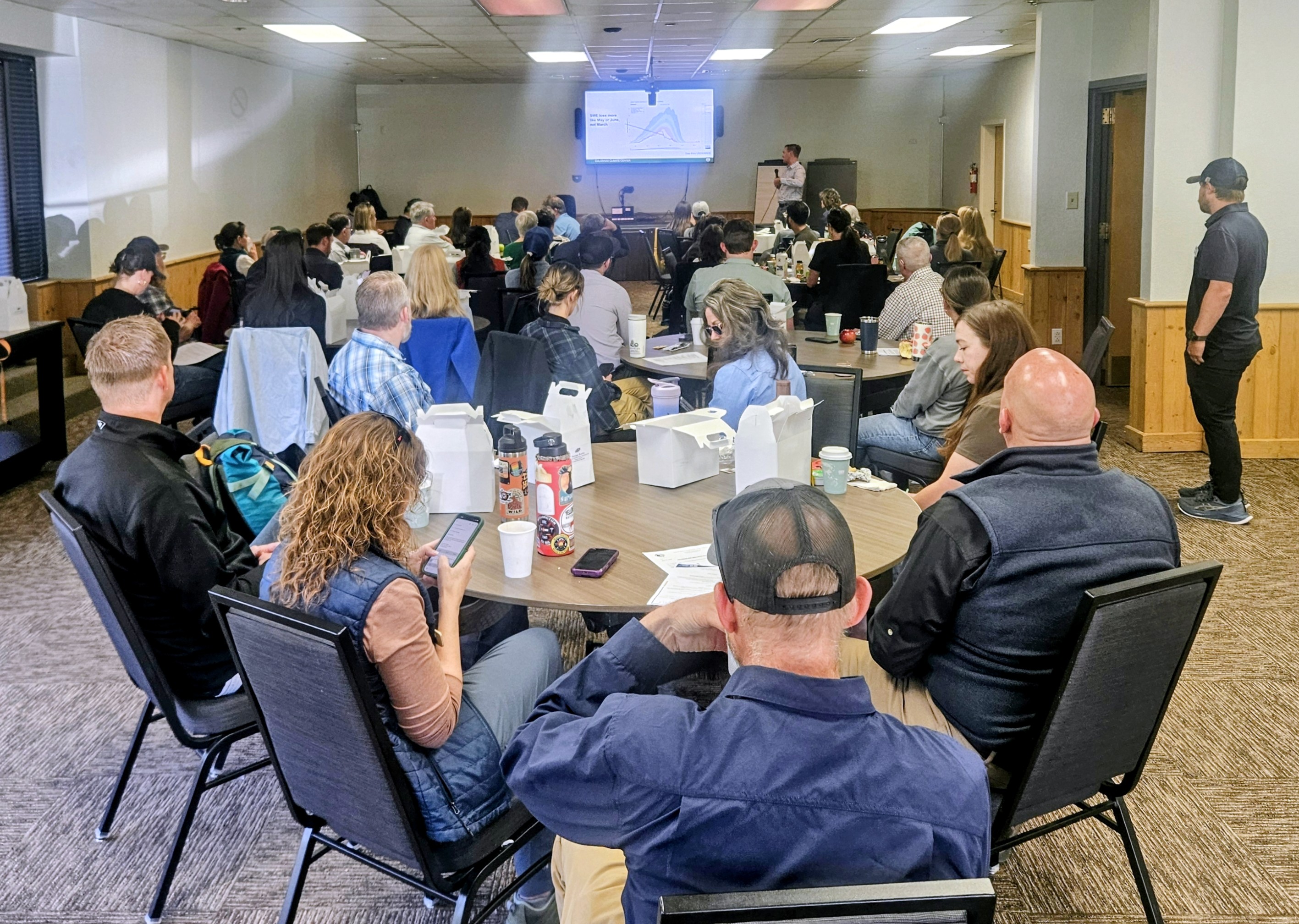
Tour participants were welcomed at the Vintage Hotel at the base of Winter Park Resort, where they heard about snow drought characteristics and forecasting challenges, the impacts of drought on recreation and resort communities, and the economic and social toll of drought in Grand County. The Mayor of Winter Park, Nick Kutrumbos, said, “our mountain communities are certainly resilient, but our economy remains highly dependent on healthy winters and forests,” while a representative from Winter Park Resort shared that visits were down 29 percent. According to Doug Laraby, Planning Manager at Winter Park Resort, great skiing requires at least 50 inches of snow covering the resort, but by February this year, runs without snowmaking equipment only had about 15.
Speakers
Russ Schumacher - State Climatologist
Doug Laraby - Planning Director for Winter Park Resort
Nick Kutrumbos - Town of Winter Park Mayor
Related Article: Colorado Climate Center supports state through alarming drought conditions - Colorado State University
Fraser River
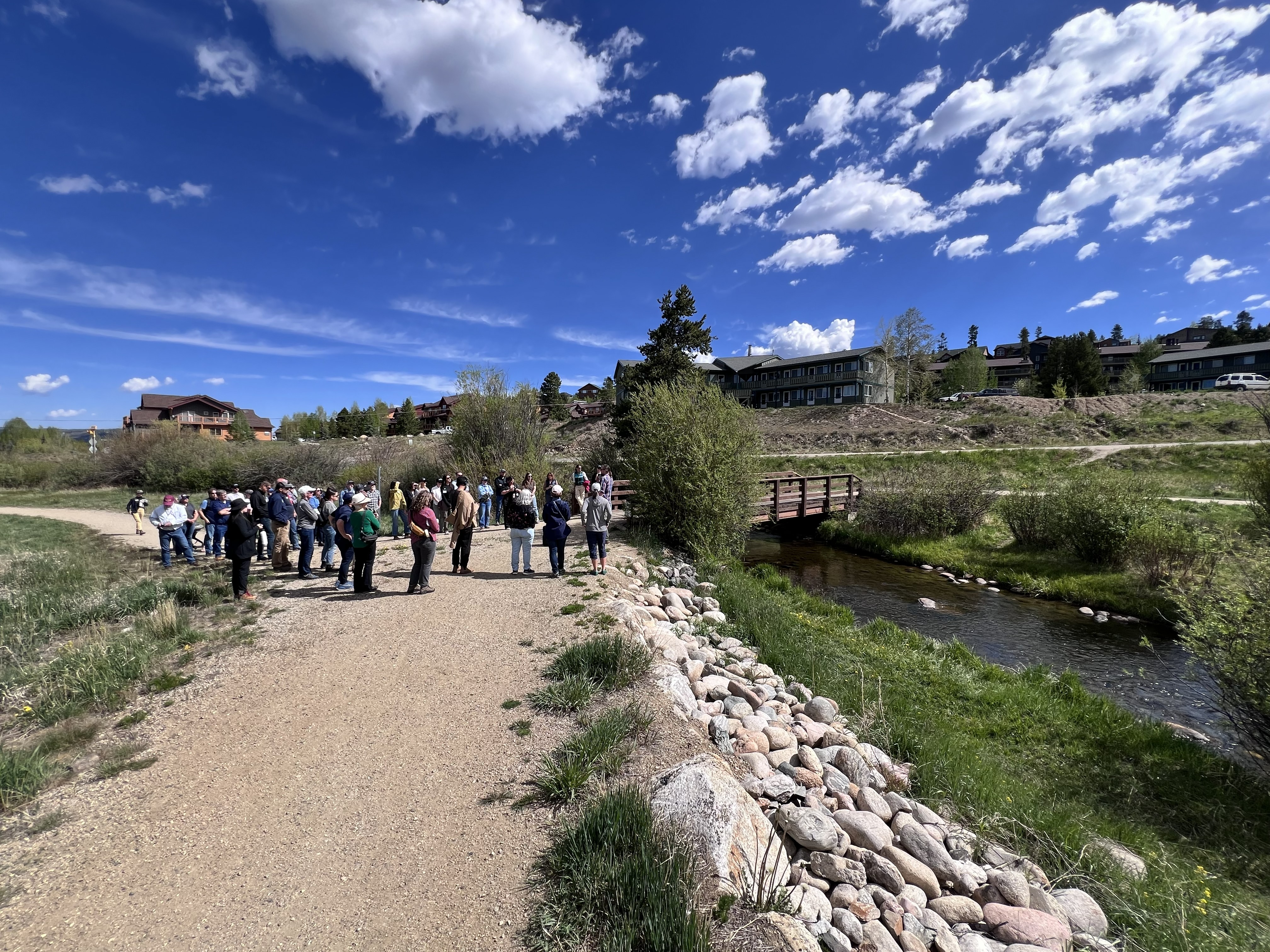
Standing next to the Fraser River, which was only running at about 36 cubic feet per second compared to its 500-800 cfs typical flow at this time of year, tour participants heard about the impacts of drought on river recreation and stream health. The connections between the ski resort’s slow and warm winter and the summer’s outlook for rafting are more than just related to available snow or flow – often, ski lift operators become raft guides when the seasons change, and this year there haven’t been enough customers in either industry to support everyone. Kristin Green, a policy advisor at Northwest Colorado Council of Governments, also shared the results of a CWCB Water Plan Grant funded study showing that the linkage between headwaters communities and the water-based recreation economy is a critical part of the state’s economic health.
Speakers
Ryan Snodgrass - Co-Owner of Downstream Adventures Rafting
Lindsey DeFrates - Deputy Director of Communications at Colorado River Water Conservation District
Bus Speaker: Kristin Green - Policy Advisor for Northwest Colorado Council of Governments
Related Article: After a grim Colorado ski season, drought is crippling rafting - The Colorado Sun
Kawuneeche Valley
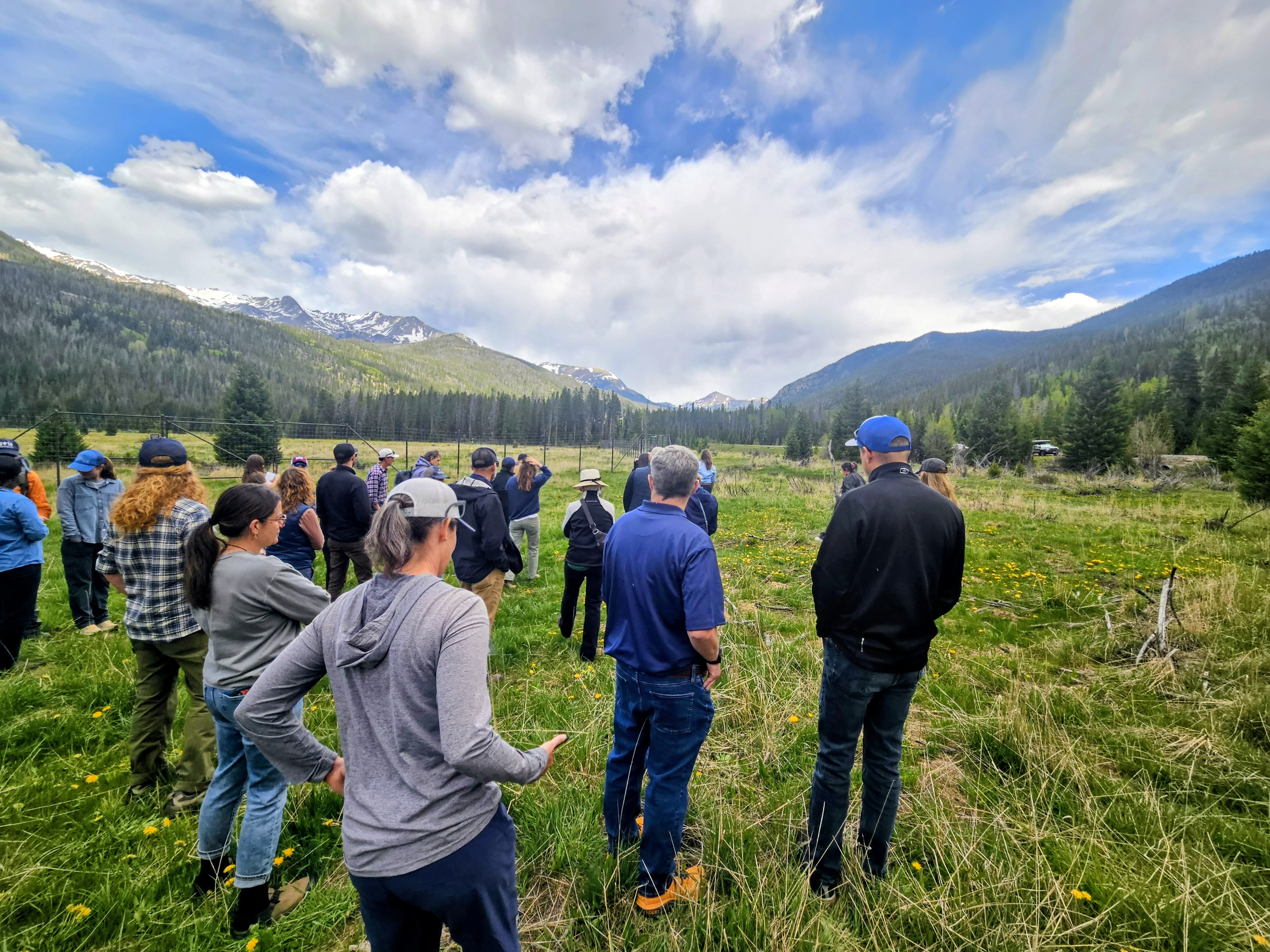
Overlooking the Beaver Creek Site, the first of four planned projects by the Kawuneeche Valley Restoration Collaborative, tour participants learned about how a healthy, functioning wetland is a multi-beneficial ecosystem, especially as it relates to water quality and quantity. The Collaborative, formed by Northern Water, Grand County, Rocky Mountain National Park, Colorado State University, Rocky Mountain Conservancy, the town of Grand Lake, the Arapaho-Roosevelt National Forest, and the Nature Conservancy, is working on actively restoring the valley that’s just below the Colorado River headwaters in an effort to build resiliency, improve habitat, and reduce sedimentation into the three lakes that help support the Colorado-Big Thompson system.
Speakers
Kimberly Tekavec - Source Water Protection Specialist at Northern Water
Jeremy Shaw - Research Scientist at Colorado State University
Bus Speaker: Jon Ewert - Aquatic Biologist at Colorado Parks and Wildlife
Related Article: What can humans learn from Kawuneeche Valley beavers when it comes to drought-proofing the landscape? - Sky-Hi News
Northern Water Willow Creek Facility
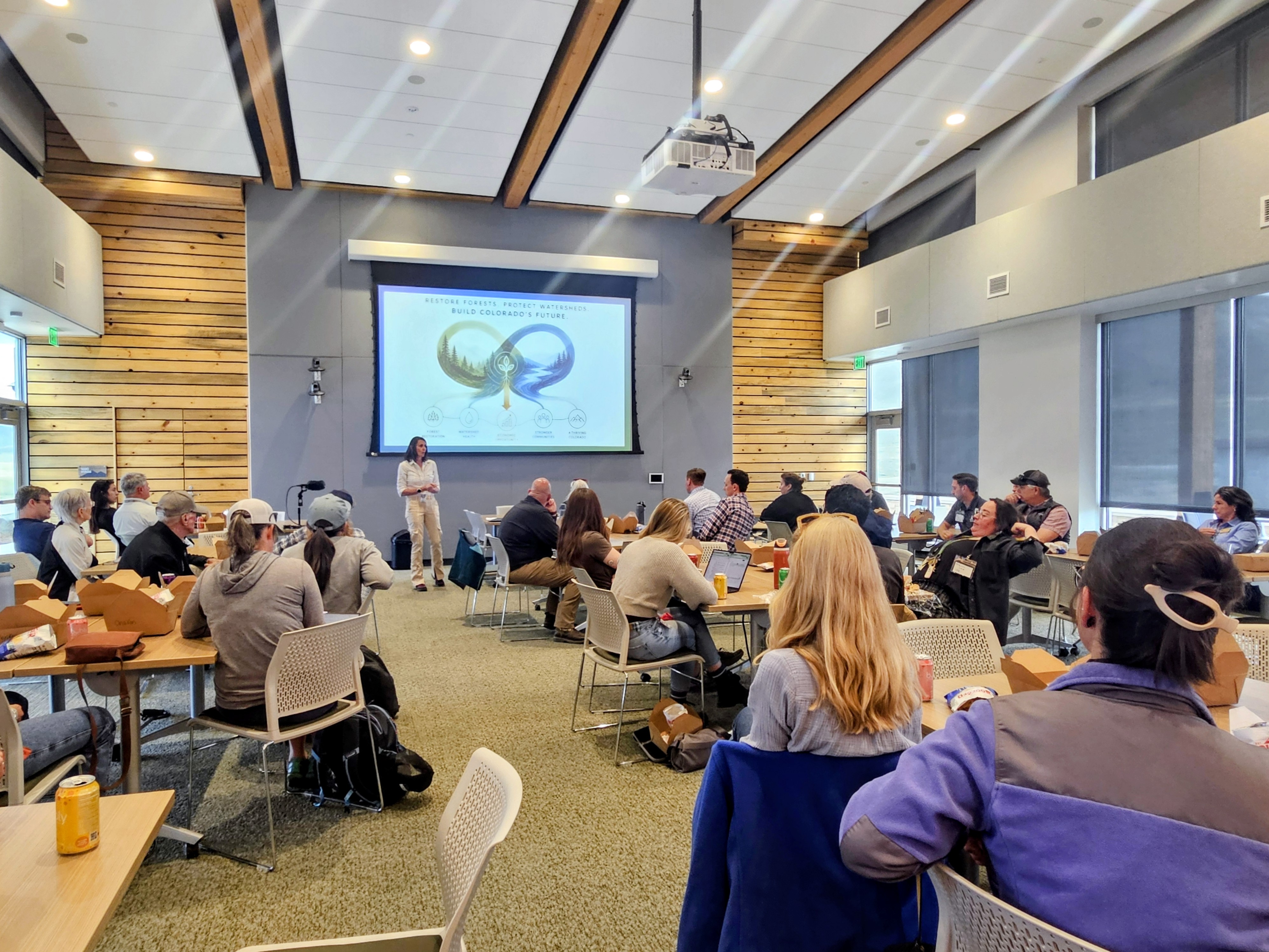
While eating lunches from the Winter Park-based sandwich shop Rudi’s, tour participants were given a presentation on the Colorado-Big Thompson (C-BT) Project, including information about its role as a supplemental water supply during drought years and the allotment decision-making process and allocation management. Another presentation provided perspective on Northern Water’s efforts to protect and restore wetlands in source water areas, displaying a commitment to both sustaining watershed health and serving Northern Colorado communities.
Speakers
Brad Wind - General Manager of Northern Water
Esther Vincent - Director of Environmental Services at Northern Water
Bus Speaker: Evanne Caviness - Colorado Department of Agriculture
Kemp Breeze State Wildlife Area
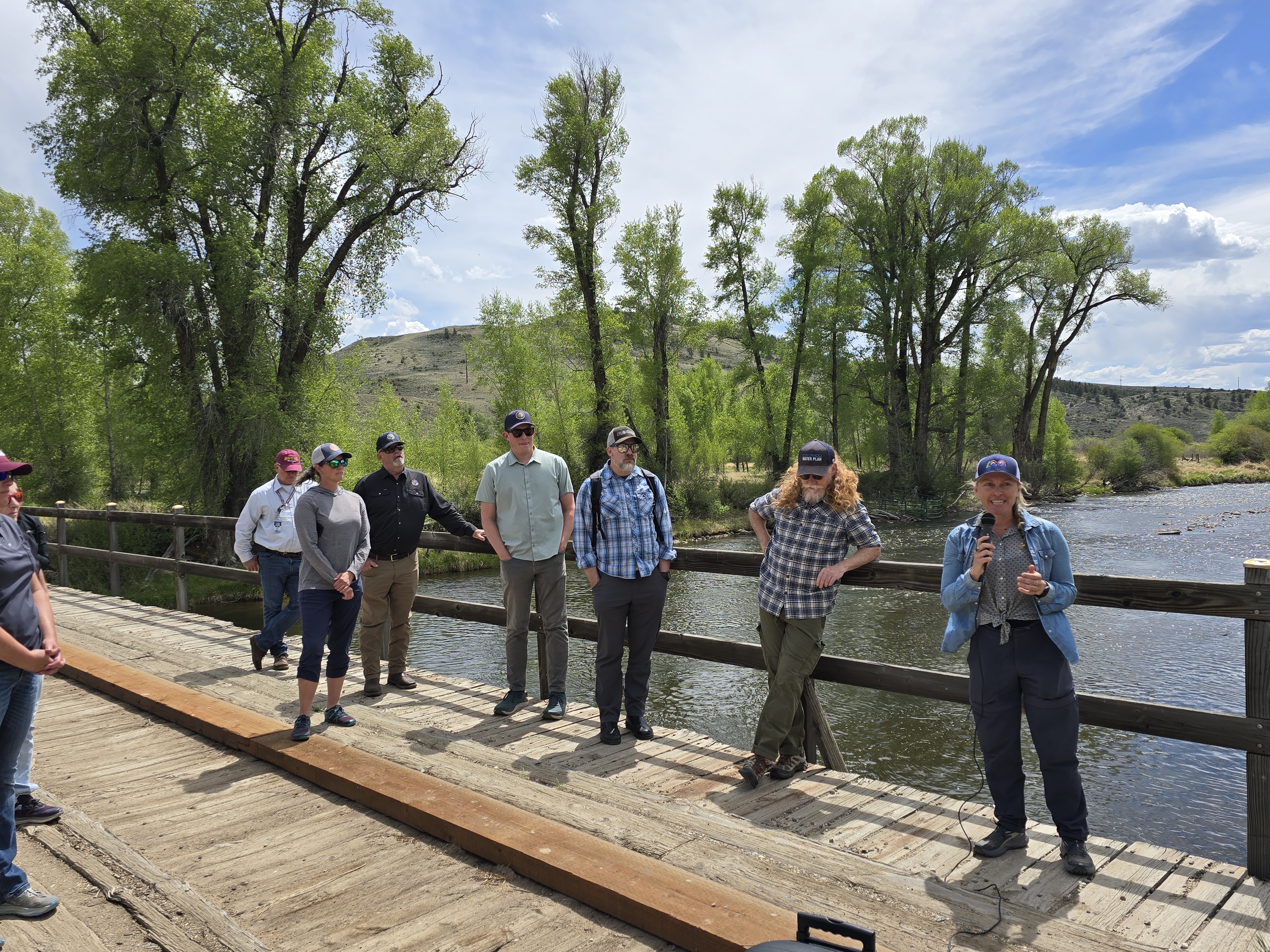
Standing on a bridge over the Colorado River near Parshall, speakers shared the troubling impacts of drought on agriculture as well as some of the inspiring examples of adaptive action taken to make agriculture more drought resilient. One common point was that collaboration and partnership help producers tremendously in troubling times. But, the collaboration that happens today has only come as a result of learning from prior droughts.
Speakers
Lindsay DeFrates - Deputy Director of Communications at Colorado River Water Conservation District
Doug Bruchez - Rancher at Reeder Creek Ranch
Kate Greenberg - Commissioner of Colorado Department of Agriculture
Related Article: How is drought impacting Western Slope communities, industries? - Summit Daily
Williams Fork Reservoir
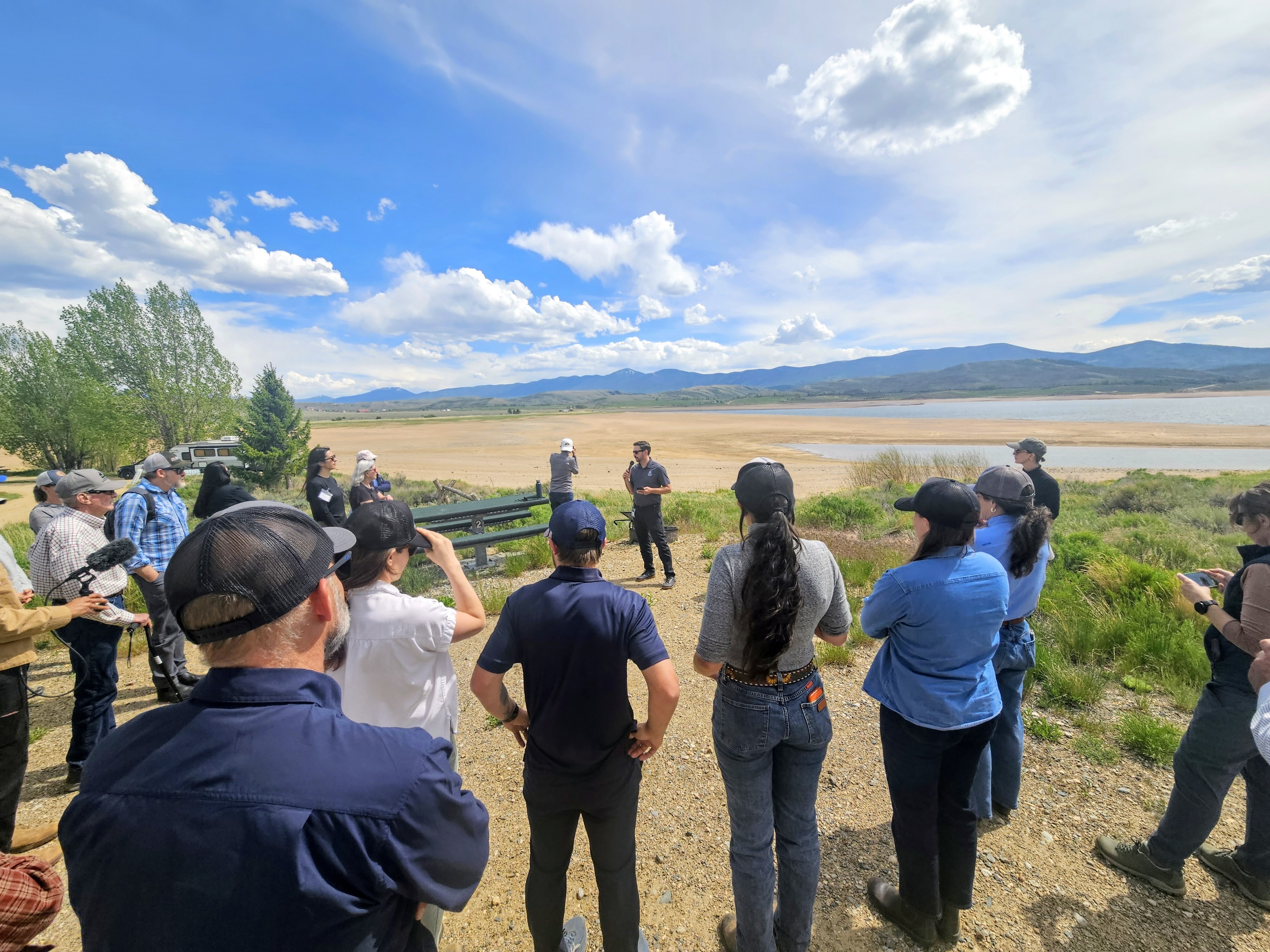
At the final stop on the tour, participants heard about how Denver Water is navigating drought conditions, including restrictions, supply-side management, and decision-making, all with the backdrop of low water levels at Williams Fork Reservoir.
Speakers
Nathan Elder - Manager of Water Supply at Denver Water
Bus Speaker: Katherine Morris - Water Resource Manager at Grand County
Articles
After a grim Colorado ski season, drought is crippling rafting - The Colorado Sun
How is drought impacting Western Slope communities, industries? - Summit Daily
What can humans learn from Kawuneeche Valley beavers when it comes to drought-proofing the landscape? - Sky-Hi News
Colorado Climate Center supports state through alarming drought conditions - Colorado State University
Drought impacts flow into Northwest Colorado fisheries - Summit Daily


-
-
Deputy Section Chief
Email sam.stein@state.co.us -
Lead Drought and Conservation Analyst

-
Water Planning and Climate Impacts Specialist
Email emily.adrid@state.co.us